
Frequently Asked Questions about Our Farm
-
Alpha, bravo, charlie, delta, echo… Our last name starts with a B. Bravo is for the B, and the rest was history!
-
We are located in Rockingham County, NC, about 20 miles north of Greensboro.
-
Yes, we are committed to sustainable agricultural practices. Our life (including our health, livelihood, and future) depends on it! Here are a few examples of sustainable agriculture in action on our farm:
We’re focused on using the whole animal after butchery. We don’t just sell the premium cuts. We sell a variety of organ meats from cattle and pigs. We utilize otherwise discarded parts (like fat or bones) and devote extra time and energy to convert these “wastes” into beautiful artisan goods, like our premium tallow candles, tallow lip balm, heritage lard soap, and more.
Our pastures are biodiverse - at any given time we aim for 10-15 different species of grasses and forages to be available for our cattle to consume. These forages work in beautiful harmony with each other to promote soil health, independence from artificial commercial additives, and natural balance. This is the goal in the pastures where our cattle graze - many of the farms we rent take a few years to get to this goal, but we think the extra sustainability effort is worth it.
We are committed to business sustainability, too — the decisions we make today will impact us for years to come. Business decisions like using an eco-friendly shipping box, partnering with non-profits, and business diversity are part of our long-term sustainability plan.
-
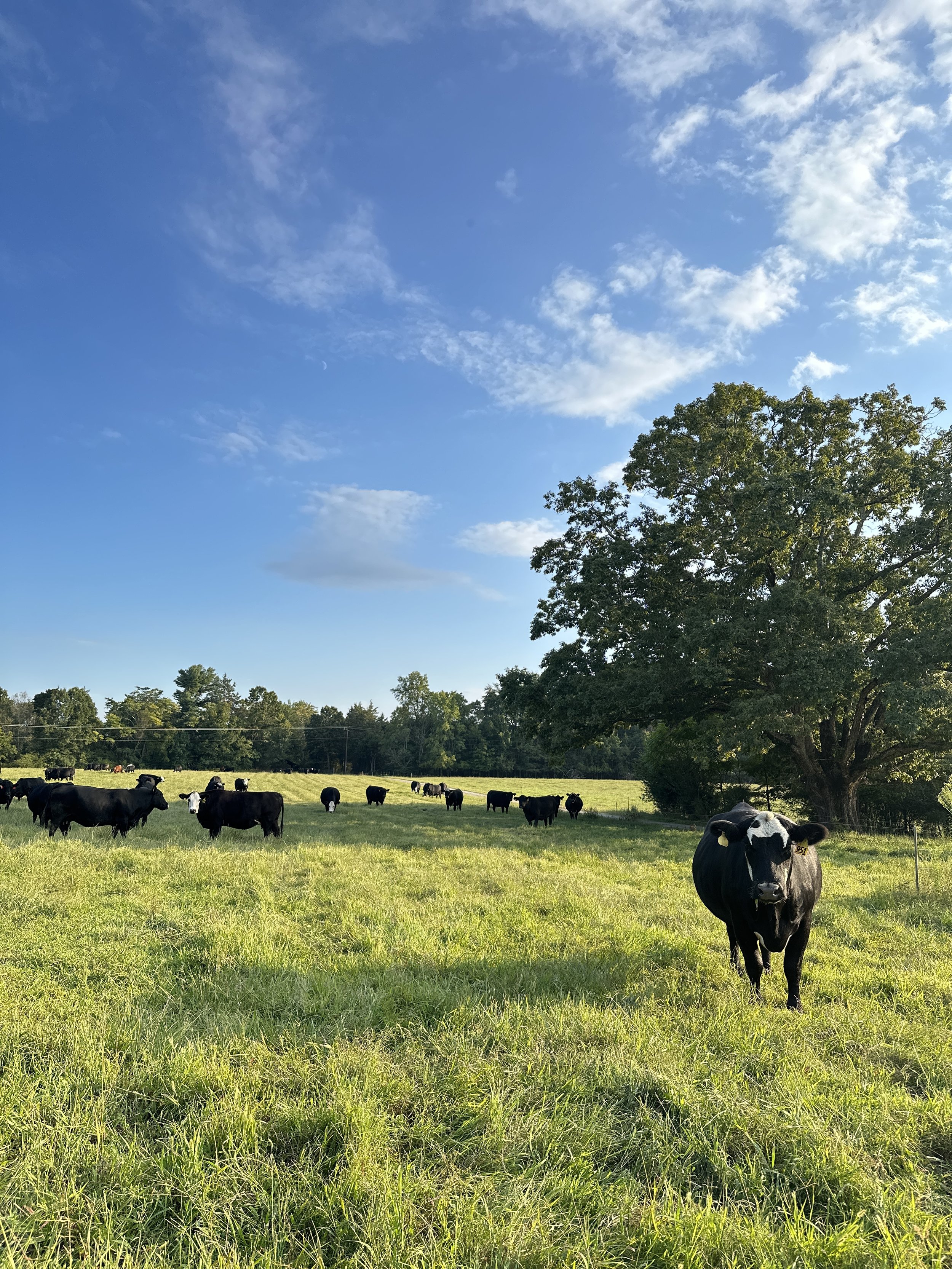
Yes, all of our cattle graze green pastures when our grasses are growing seasonally, and we provide hay to them during the remaining times of the year when grass isn’t growing. Hay is grass that has been dried, allowing us to preserve forage for the seasons when fresh pasture isn't available.
Our cattle are grass-fed but not grass-finished. To produce the premium flavor, tenderness, and marbling our customers enjoy, we finish our beef with a custom-blended feed made by a local feed mill alongside pasture or hay. This balanced diet supports animal health while creating consistently high-quality beef.
-
We didn’t take over an existing operation or acquire farmland through generational transfer. We started from the ground up by renting vacant farmland from people who were total strangers at the time (and have become some of our dearest supporters), and we’ve grown every year since then. We purchased the livestock, equipment, supplies, etc. one piece at a time.
-
We truly appreciate your interest in our farm! At this time, we aren't able to offer individual or small-group farm tours.
Bravo Steaks is just one part of what we do. We also raise and market registered Angus cattle, Berkshire pigs, and sheep for breeding programs across the United States. Between caring for our livestock, managing the farm, packing orders, and spending time as a family, our days stay wonderfully full.
To make the best use of our time, we keep farm visits limited to scheduled Pickup at the Farm orders in our designated pickup area.
If you'd like a behind-the-scenes look at life on the farm, we'd love to have you follow along! We regularly share photos, videos, and updates on Instagram (@emilyatbravo) and on our Substack, The Ewe Turn: A Farm Makeover.
-
No, we do not.
-
Yes, but only when an animal truly needs them.
Our philosophy is simple: we believe it's our responsibility to prevent illness whenever possible and to provide appropriate medical care when it's needed. We do not believe in letting animals suffer simply to preserve an "antibiotic-free" label.
The vast majority of livestock raised on our farm never require antibiotics. We focus on preventive management, excellent nutrition, low-stress handling, clean pastures, and close daily observation to keep our livestock healthy. Most common illnesses can be prevented, or risk greatly reduced, through attentive animal husbandry.
Occasionally, however, life happens. A grazing ewe may suffer a snakebite. A young calf may develop pneumonia after cold, wintry weather. Just as you would expect appropriate medical care for your family pet, we believe our livestock deserve the same attention and treatment.
Whenever an animal requires antibiotics, the treatment is documented in an electronic health record. That animal is then withheld from harvest until the medication has completely cleared its system. Depending on the medication, that withdrawal period is typically 30–45 days.
One reason we don't market our beef as "antibiotic-free" is because we think those programs can unintentionally create pressure for farmers to avoid treating sick animals. Our priority always will be the health and welfare of the livestock in our care.